Revolutionizing Broadcast Facilities: How Technological Advancements Shape Modern Infrastructure Planning
Discover how UHD production, virtual sets, and advanced connectivity shape modern broadcast facilities. Expert insights included.
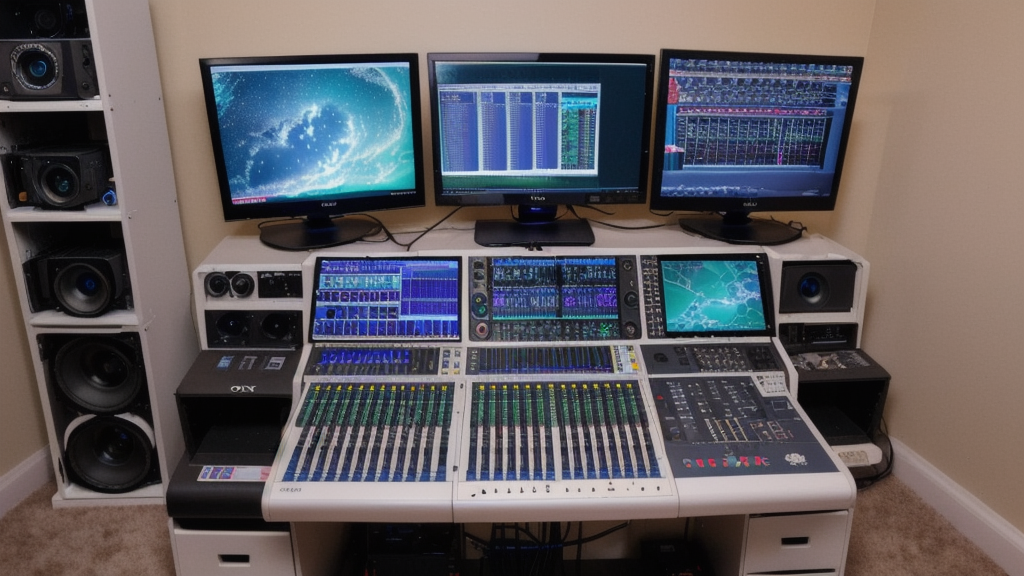
In an era where technology continues to push boundaries, the world of broadcast facilities is undergoing a profound transformation. From high-definition production to immersive virtual experiences, advancements in broadcast technology are not only enhancing viewer engagement but also redefining how sports content is produced and delivered.
The Role of 4K/UHD Production
One of the most significant shifts in broadcast technology is the transition from standard definition to ultra-high-definition (UHD) and 4K production. According to a report by Grand View Research, the global UHD market size was valued at USD 21.9 billion in 2021 and is projected to reach USD 68.3 billion by 2028, growing at a CAGR of 15.7% from 2022 to 2028. "The move to UHD isn't just about resolution; it's about the entire ecosystem," says Dr. Sarah Chen, Director of Broadcast Technology at TechnoVision Solutions. "From cameras like Sony's F65 and Blackmagic Design's URSA Mini Pro 12K to software suites like DaVinci Resolve and Avid Media Composer, every component must be upgraded to support high-fidelity production."
Embracing Virtual Production
Virtual production has emerged as a game-changer, enabling broadcasters to create highly immersive environments without the constraints of traditional on-location shoots. Companies such as Unreal Engine and Epic Games are leading this charge with their powerful software tools that allow for real-time rendering and interactive storytelling. "Virtual production is revolutionizing how we think about content creation," notes Alex Johnson, Chief Engineer at Virtual Studios Inc. "With systems like Unreal Engine, we can create stunning virtual sets and seamlessly integrate live action footage, significantly reducing production costs while increasing creative flexibility."
The Future of Connectivity and Networking
As broadcast facilities continue to grow in complexity, ensuring robust connectivity and networking capabilities is crucial. Technologies such as 5G and fiber optics are enabling faster data transfer speeds and higher bandwidths, supporting the demands of high-resolution video streaming and real-time collaboration. The demand for low-latency solutions is also driving innovation in this space. Companies like Teradek and AJA Video Systems offer cutting-edge encoding and decoding solutions that can transmit 4K footage over long distances with minimal delay, making remote production more feasible than ever before.
Conclusion
The landscape of broadcast facilities is rapidly evolving, driven by technological advancements that are pushing the boundaries of what's possible in sports broadcasting. From UHD production to virtual sets and high-speed connectivity, these innovations not only enhance viewer experiences but also open up new possibilities for creative storytelling. As technology continues to evolve, one thing remains clear: those who adapt will lead the way in this exciting and ever-changing industry.

Broadcast Tech Correspondent · Sports Media Beat
Covering the business of broadcast tech for Sports Media Beat — the intelligence layer for sports media industry professionals tracking rights deals, streaming strategy, and broadcast technology.
All articles by Priya Nanthan →Discussion
Join the conversation
Comments are moderated. Please keep discussion respectful and on-topic. Flag inappropriate content using the flag icon.
You May Also Like

MLB Network Enhances Affiliated Baseball's Exposure
Exploring the impact of MLB Network's partnership with AAPB All-Star Game and its potential to elevate broadcast production standards for affiliated baseball.

Mediaproxy's LogServer Comes to US Market with HVS Integration
The partnership between Mediaproxy and Heartland Video Systems (HVS) brings advanced logging and monitoring solutions to the U.S. broadcast market, setting a ne

Backblaze's Cutting-Edge Storage Solution Powers CoreWeave's AI Cloud Infrastructure
The partnership between Backblaze and CoreWeave marks a significant step in the world of sports broadcast production as it enhances the storage capacity for AI

