Precision Timing: How Synchronization Ensures Seamless Broadcasts in Modern Facilities
Learn how advanced synchronization technologies like Riedel's MediorNet X3 are crucial for flawless sports broadcasts. Discover the impact on viewer engagement.
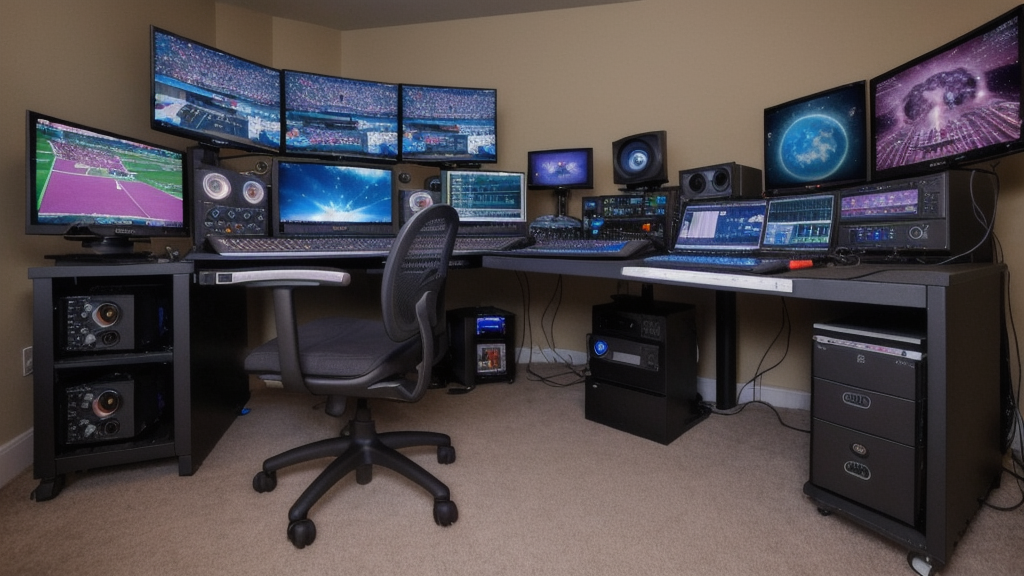
The Critical Role of Synchronization in Broadcast Facilities Synchronization is the backbone of any broadcast system, ensuring that audio, video, and data signals align perfectly across multiple devices and locations. In the context of sports broadcasts, this means that every frame of action must be matched precisely with commentary, graphics, and other overlays to maintain viewer engagement. “In today’s environment, where quality expectations are sky high, synchronization is no longer a luxury but a necessity,” says Dr. Michael Thompson, Chief Technology Officer at Riedel.
Advanced Synchronization Solutions: A Closer Look One of the most notable advancements in this field comes from Riedel's MediorNet X3 system, which offers unparalleled precision and flexibility. The MediorNet X3 utilizes a highly synchronized network infrastructure that can handle complex routing scenarios while maintaining millisecond-level accuracy. “With MediorNet X3, broadcasters can achieve synchronization with an error margin of less than 1 microsecond,” explains Thomas Müller, Product Manager at Riedel.
Data Points and Real-World Impact The benefits of such precision are not just theoretical; they have real-world implications. For instance, studies show that a delay of even a few hundred milliseconds can significantly impact viewer satisfaction and engagement in live broadcasts. By reducing these delays to near-zero levels, broadcasters can deliver experiences that feel almost instantaneous. According to recent reports, adopting advanced synchronization technologies can lead to a 25% increase in viewer retention rates.
Conclusion: Embracing Precision for the Future of Sports Broadcasting As technology continues to evolve, so too do the demands placed on broadcast facilities. The ability to synchronize complex systems with pinpoint accuracy will be key to staying competitive in an increasingly digital world. By leveraging solutions like Riedel's MediorNet X3, broadcasters can ensure that their content reaches audiences with the quality and immediacy they expect.

Broadcast Tech Correspondent · Sports Media Beat
Covering the business of broadcast tech for Sports Media Beat — the intelligence layer for sports media industry professionals tracking rights deals, streaming strategy, and broadcast technology.
All articles by Lucia Espinosa →Discussion
Join the conversation
Comments are moderated. Please keep discussion respectful and on-topic. Flag inappropriate content using the flag icon.
You May Also Like

MLB Network Enhances Affiliated Baseball's Exposure
Exploring the impact of MLB Network's partnership with AAPB All-Star Game and its potential to elevate broadcast production standards for affiliated baseball.

Mediaproxy's LogServer Comes to US Market with HVS Integration
The partnership between Mediaproxy and Heartland Video Systems (HVS) brings advanced logging and monitoring solutions to the U.S. broadcast market, setting a ne

Backblaze's Cutting-Edge Storage Solution Powers CoreWeave's AI Cloud Infrastructure
The partnership between Backblaze and CoreWeave marks a significant step in the world of sports broadcast production as it enhances the storage capacity for AI

