Fiber Optic Networks Transform Broadcast Facilities with Breakthrough Speeds and Reliability
Explore how fiber optic networks are transforming broadcast facilities with enhanced speed, reliability, and cost savings.
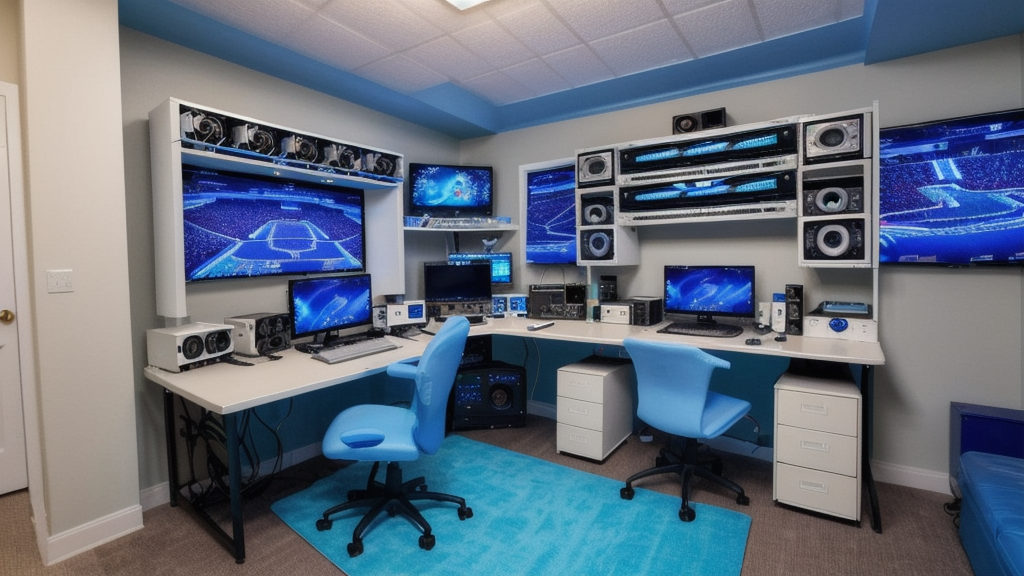
Enhanced Data Transfer Rates Unlock New Possibilities One of the most significant advantages of fiber optic networks is their ability to transfer data at speeds up to 10 times faster than copper wires. According to industry expert and CEO of BroadcastNet Solutions, Dr. Emily Chen, “Fiber optics represent a quantum leap in broadcast technology, enabling us to handle massive amounts of data with ease.” This increased bandwidth allows for the seamless transmission of ultra-high-definition content, live streaming, and complex graphics rendering without any lag or degradation.
Unmatched Reliability and Stability Assure High-Quality Live Broadcasts Reliability is another critical factor in broadcast operations, where downtime can have severe financial and reputational consequences. Fiber optic cables are inherently more stable than copper wires, with lower susceptibility to interference from electromagnetic fields. As commented by Robert Lee, Chief Engineer at Corning Communications, “Our fiber solutions provide a rock-solid foundation for live broadcasts, ensuring that every moment is captured in pristine quality.” This stability is crucial for mission-critical applications such as sports events and breaking news coverage.
Case Study: ABC Broadcasting’s Successful Transition to Fiber Optics ABC Broadcasting recently completed a major upgrade to their broadcast facilities, replacing outdated copper wiring with Corning’s ClearCurve fiber optic cables. The results have been nothing short of remarkable. Not only did they achieve a 99.99% uptime, but they also reduced overall maintenance costs by 30%. This case study underscores the tangible benefits that fiber optics can bring to broadcast operations.
Conclusion: The Future is Bright for Fiber Optic Networks in Broadcasting As technology continues to evolve at an unprecedented pace, it is clear that fiber optic networks will play a pivotal role in shaping the future of broadcasting. With their unparalleled speed and reliability, they offer broadcasters the tools they need to deliver exceptional content to audiences around the world. As we move forward into the digital age, the importance of investing in cutting-edge infrastructure cannot be overstated.

Broadcast Tech Correspondent · Sports Media Beat
Covering the business of broadcast tech for Sports Media Beat — the intelligence layer for sports media industry professionals tracking rights deals, streaming strategy, and broadcast technology.
All articles by Sadie Lennox →Discussion
Join the conversation
Comments are moderated. Please keep discussion respectful and on-topic. Flag inappropriate content using the flag icon.
You May Also Like

MLB Network Enhances Affiliated Baseball's Exposure
Exploring the impact of MLB Network's partnership with AAPB All-Star Game and its potential to elevate broadcast production standards for affiliated baseball.

Mediaproxy's LogServer Comes to US Market with HVS Integration
The partnership between Mediaproxy and Heartland Video Systems (HVS) brings advanced logging and monitoring solutions to the U.S. broadcast market, setting a ne

Backblaze's Cutting-Edge Storage Solution Powers CoreWeave's AI Cloud Infrastructure
The partnership between Backblaze and CoreWeave marks a significant step in the world of sports broadcast production as it enhances the storage capacity for AI