Strategic Siting of SFN Gap-Fillers Offsets Coverage Shortfalls From Main Transmitters 40 Miles Distant
Gap-filler transmitters in single-frequency networks require careful placement calculations when the primary facility sits far from the population centroid
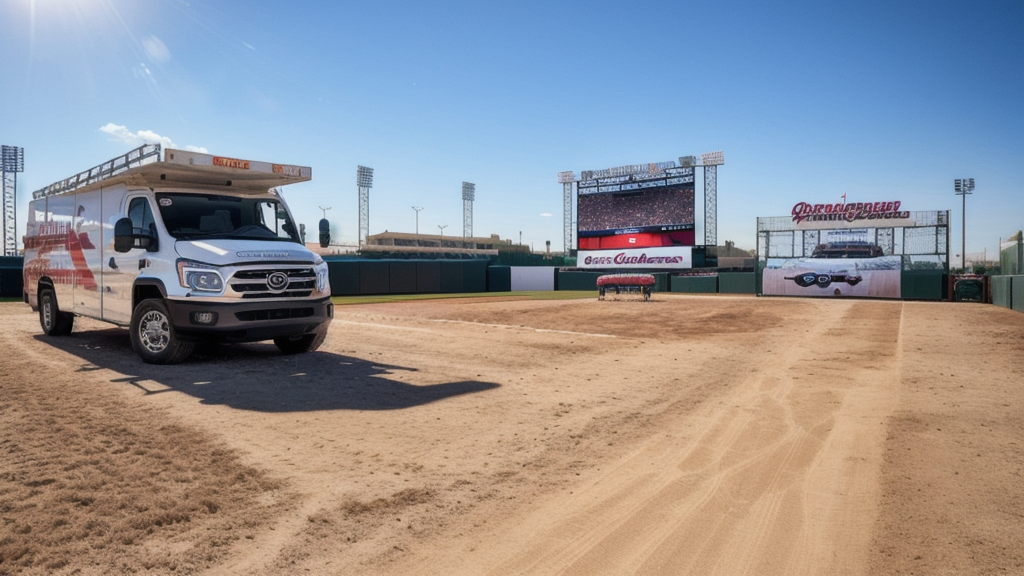
Broadcast operators deploying ATSC 3.0 single-frequency networks face measurable coverage shortfalls when the main transmitter stands 40 miles from the population centroid. The distance produces field strengths below 40 dBu in core residential zones under FCC OET Bulletin 69 propagation models, forcing reliance on synchronized gap-fillers to restore service. Proper siting begins with drive-test data collected at 1-mile intervals along radial lines from the main stick, confirming where the primary signal drops below threshold before any auxiliary unit is ordered.
Standards from ATSC A/300 specify that all transmitters in an SFN must maintain frequency lock within 1 Hz and timing alignment to within plus or minus 1 microsecond relative to GPS-derived references. Gap-fillers operating under FCC Part 73 low-power television rules typically fall into the 100-watt or 1-kilowatt transmitter class, using solid-state amplifiers with integral GPSDO modules. Selection of the 1-kilowatt class allows 5-7 mile extension of the service contour when antenna height above average terrain reaches 150 feet, yet requires verification that the combined emission mask stays inside the allocated channel mask limits at every measurement point.
Terrain shielding becomes the dominant placement factor. A candidate site 12 miles southwest of the centroid, shielded by a 200-foot ridge from the main transmitter, reduces incoming field strength to 28 dBu and permits the gap-filler to operate at full power without exceeding the 0.5 percent interference allowance to co-channel stations. Engineers run Longley-Rice point-to-point predictions at 30-meter resolution before filing the construction permit, then confirm results with a spectrum analyzer sweep showing the main signal at least 20 dB below the gap-filler output at the population centroid.
Field troubleshooting after activation centers on synchronization verification and multipath analysis. Technicians first confirm 1-PPS GPS lock at both sites using a rubidium-referenced counter, then measure the relative emission timing offset with a vector signal analyzer sampling the ATSC 3.0 bootstrap symbols. Offsets greater than 0.8 microseconds trigger immediate adjustment of the internal delay registers in the modulator. Persistent viewer complaints of signal breakup often trace to local reflections; a portable field-strength meter with directional antenna isolates the reflection angle, allowing the installer to rotate the receive antenna or add a 3 dB pad on the input to the gap-filler receiver to suppress the unwanted path.
Business impact appears in both capital outlay and long-term revenue. A single 1-kilowatt gap-filler site including tower lease, electrical service, and FCC licensing averages 185,000 dollars, with annual operating costs near 22,000 dollars. Coverage modeling shows the added unit lifts population served from 312,000 to 478,000 persons, increasing projected annual advertising revenue by 1.4 million dollars when local ratings rise proportionally. Operators must weigh this return against the risk of mutual interference if site selection places the gap-filler too close to the 40-mile main stick, which can force power reduction and erase the projected gain.
Coordination with the local power utility for backup generation at remote sites further affects uptime statistics. A 48-hour battery plant sized for 1.2 kilowatts continuous draw prevents synchronization loss during utility outages, preserving the SFN timing chain. Post-installation verification requires submission of measured field-strength contours to the FCC within 30 days of commencement of operation, confirming that the 41 dBu protected contour matches the licensed parameters within 2 dB at all test points.
Continued monitoring uses remote telemetry reporting received signal-to-noise ratio at fixed probe locations inside the centroid. Thresholds below 18 dB for more than 30 minutes trigger dispatch of a technician equipped with a spectrum analyzer and portable GPS timing receiver. This regimen keeps service outages below 0.2 percent annually, directly supporting the revenue projections tied to consistent viewership.

Rights & Deals Correspondent · Sports Media Beat
Covering the business of rights & deals for Sports Media Beat — the intelligence layer for sports media industry professionals tracking rights deals, streaming strategy, and broadcast technology.
All articles by Devon Okafor →Discussion
Join the conversation
Comments are moderated. Please keep discussion respectful and on-topic. Flag inappropriate content using the flag icon.
You May Also Like
Strategic SFN Gap-Filler Siting for Main Transmitter Sites Forty Miles from Audience Centers
A 40-mile offset between the primary transmitter and population centroid creates measurable signal shortfalls that single-frequency network gap fillers can
Revolutionizing Sports Rights Valuation: How Advanced Analytics and AI Are Shaping the Future
Discover how advanced analytics and AI are revolutionizing sports rights valuations with tools like SportVest's ValuEngine.
Global Sports Rights Market Surges: Navigating the Digital Transformation and Future Trends
Explore the booming global sports rights market driven by tech advancements like VR, AI, and fan engagement platforms.