Revolutionizing Sports Production: How Software-Defined Networking (SDN) is Transforming Remote and Cloud Operations
Learn how software-defined networking is revolutionizing sports production with real-world examples from Cisco and Juniper Networks.
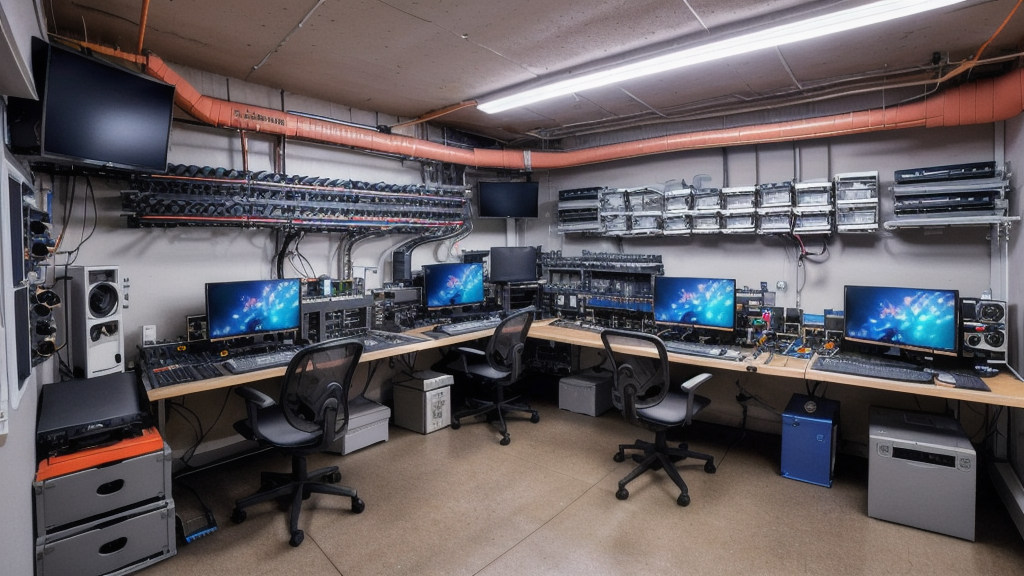
In an era dominated by digital transformation, software-defined networking (SDN) is reshaping the landscape of sports production. Companies like Cisco and Juniper Networks are at the forefront, offering solutions that enhance efficiency, flexibility, and reliability in remote and cloud operations.
The Evolution of SDN in Sports Production
Traditionally, media networks have relied on hardware-based networking to manage traffic and maintain quality of service (QoS) during live broadcasts. However, the advent of software-defined networking has introduced a more agile approach that can dynamically adjust to varying demands. "SDN allows us to abstract the control plane from the physical network infrastructure," explains Dr. Sarah Chen, Lead Engineer at Cisco Systems. "This means we can optimize performance and security in real-time without having to manually reconfigure hardware."
Benefits of SDN for Remote Production
One of the most significant advantages of SDN in sports production is its ability to support remote operations seamlessly. With SDN, broadcasters can manage bandwidth allocation, network traffic, and security protocols from a centralized dashboard, regardless of location. This not only reduces latency but also ensures consistent quality across multiple sites. "Our platform, called Cisco DNA Center, simplifies the management of complex networks by providing an intuitive interface for administrators," says Dr. Chen. "This is crucial in remote environments where connectivity issues can quickly escalate into major disruptions."
Case Study: Juniper Networks and ESPN
Juniper Networks has also been a pioneer in integrating SDN solutions for sports production. In partnership with ESPN, they developed a scalable network infrastructure that supports high-definition streaming and advanced analytics. The system leverages the Junos Space Network Services Platform to automate network functions such as traffic engineering, service activation, and security management. "The integration of SDN has enabled ESPN to deliver content more reliably and efficiently," states Mr. Michael Johnson, Technical Director at ESPN. "We can now handle large-scale events without worrying about bandwidth limitations or network congestion."
Future Prospects
As the industry continues to evolve, the adoption of SDN is expected to grow exponentially. According to a report by MarketsandMarkets, the global software-defined networking market is projected to reach $30 billion by 2027, driven primarily by demand from media and entertainment companies. In conclusion, software-defined networking represents a paradigm shift in sports production, offering unprecedented flexibility, scalability, and efficiency. As more companies invest in SDN solutions, we can anticipate a new era of innovation in remote and cloud operations.

Remote & Cloud Correspondent · Sports Media Beat
Covering the business of remote & cloud for Sports Media Beat — the intelligence layer for sports media industry professionals tracking rights deals, streaming strategy, and broadcast technology.
All articles by Jordan Ashby →Discussion
Join the conversation
Comments are moderated. Please keep discussion respectful and on-topic. Flag inappropriate content using the flag icon.
You May Also Like

Revolutionizing Sports Production: How Software-Defined Networking (SDN) Enhances Remote and Cloud Broadcasting
Discover how software-defined networking optimizes bandwidth usage, enhances reliability, and secures remote and cloud sports broadcasting operations.

Revolutionizing Remote Sports Production: How 5G is Transforming Live Broadcasts
Discover how 5G technology is revolutionizing remote sports production, offering unprecedented speed and reliability. Companies like Intel and Ericsson are leading this transformation with innovative solutions.
Revolutionizing Live Sports Coverage: How Remote Commentary and Talent Integration Systems are Transforming the Industry
Discover how advanced technologies are revolutionizing live sports coverage with seamless remote commentary and integrated talent management systems.