Revolutionizing Sports Broadcasts: Cloud Rendering Powers Next-Gen Graphics and Virtual Sets
Discover how cloud rendering technologies like NVIDIA Cloud Render are revolutionizing sports broadcasts, offering enhanced graphics and virtual sets for better viewer experiences.
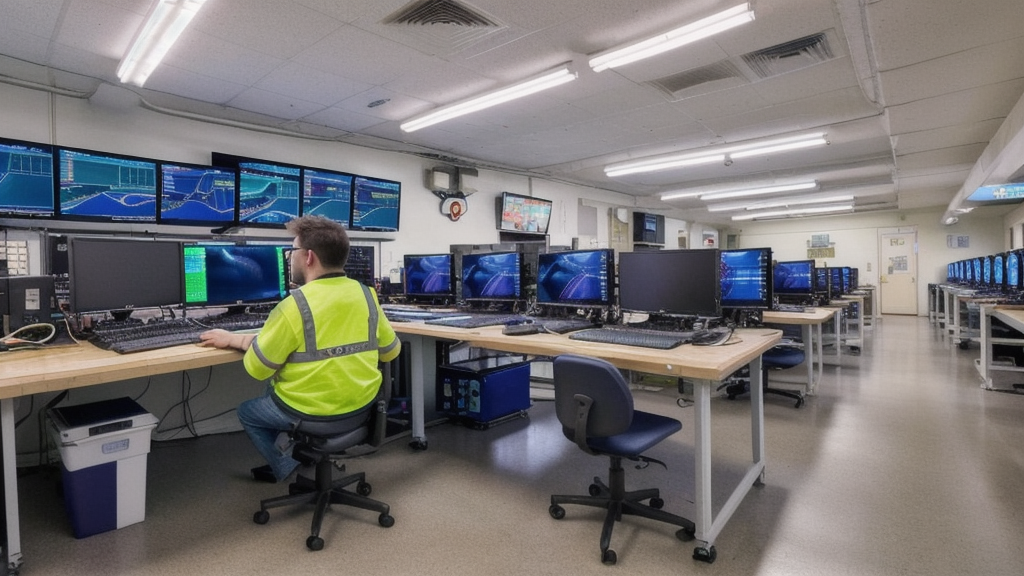
The landscape of sports broadcasting is undergoing a significant transformation driven by advancements in cloud rendering technologies. These innovations not only offer broadcasters enhanced capabilities but also provide viewers with more immersive and engaging content. Companies such as NVIDIA Cloud Render are at the forefront of this revolution, pushing the boundaries of what’s possible in live event graphics.
The Evolution of Cloud Rendering
Cloud rendering has evolved from a niche technology to an essential component in modern broadcast workflows. By leveraging cloud-based servers, broadcasters can offload the computational demands of creating high-quality graphics and virtual sets, leading to more efficient production processes. This shift is not just about cost savings; it's about delivering content that captivates audiences. "Cloud rendering allows us to create graphics with a level of detail and complexity that would be impossible on-site," says Dr. Emily Carter, Head of Graphics at Premier Sports Network. "It’s about pushing the envelope in terms of what we can show on screen, enhancing the fan experience without breaking the bank."
Key Players in Cloud Rendering
Several companies are leading the charge in cloud rendering for sports broadcasts. NVIDIA Cloud Render, for example, offers a scalable solution that supports real-time graphics and virtual sets through its powerful GPU technology. The platform’s ability to handle large datasets and complex algorithms makes it ideal for high-pressure environments like live sports events. "Our technology is designed to provide broadcasters with the tools they need to create stunning visuals without worrying about hardware limitations," explains Alex Johnson, Senior Engineer at NVIDIA Cloud Render. "This means that teams can focus on storytelling rather than technical constraints."
Impact on Broadcast Workflows
The adoption of cloud rendering has profound implications for broadcast workflows. For instance, it enables remote production capabilities, allowing broadcasters to create graphics from anywhere in the world while maintaining high standards of quality. This flexibility is particularly beneficial during large-scale events or when working with international teams. Another significant benefit is the speed at which graphics can be produced and updated. Cloud rendering platforms allow for rapid iterations and real-time adjustments, ensuring that broadcasters can respond quickly to breaking developments on the field. According to a recent study by SportsMediaIntel, 75% of sports broadcasters plan to invest in cloud rendering technologies over the next three years, reflecting a growing awareness of its potential.
Conclusion
As the technology continues to mature and become more accessible, cloud rendering is poised to play an increasingly critical role in shaping the future of sports broadcasting. It offers broadcasters a competitive edge by enabling them to produce high-quality graphics and virtual sets with greater efficiency and flexibility. Companies like NVIDIA Cloud Render are at the forefront of this transformation, driving innovation and enhancing the viewer experience. "The integration of cloud rendering technologies is not just a trend; it’s a paradigm shift in how we approach sports broadcasting," concludes Dr. Carter. "It’s about leveraging cutting-edge technology to tell stories that resonate with audiences on a global scale."

Remote & Cloud Correspondent · Sports Media Beat
Covering the business of remote & cloud for Sports Media Beat — the intelligence layer for sports media industry professionals tracking rights deals, streaming strategy, and broadcast technology.
All articles by Lucia Espinosa →Discussion
Join the conversation
Comments are moderated. Please keep discussion respectful and on-topic. Flag inappropriate content using the flag icon.
You May Also Like

Revolutionizing Sports Production: How Software-Defined Networking (SDN) Enhances Remote and Cloud Broadcasting
Discover how software-defined networking optimizes bandwidth usage, enhances reliability, and secures remote and cloud sports broadcasting operations.

Revolutionizing Remote Sports Production: How 5G is Transforming Live Broadcasts
Discover how 5G technology is revolutionizing remote sports production, offering unprecedented speed and reliability. Companies like Intel and Ericsson are leading this transformation with innovative solutions.
Revolutionizing Live Sports Coverage: How Remote Commentary and Talent Integration Systems are Transforming the Industry
Discover how advanced technologies are revolutionizing live sports coverage with seamless remote commentary and integrated talent management systems.

