Revolutionizing Remote Sports Production: How 5G is Reshaping the Industry
Discover how 5G is revolutionizing remote sports production with ultra-fast speeds and low latency from Ericsson and Intel.
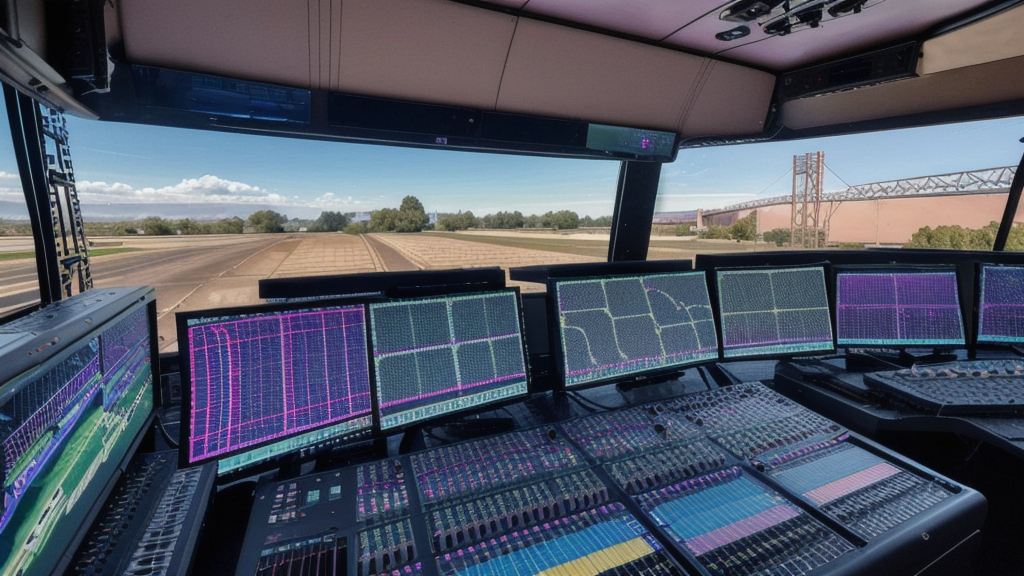
The Power of 5G in Remote Production The high-speed data transfer capabilities of 5G enable seamless transmission of large video files and live feeds from remote locations. This means broadcasters can now cover events with fewer on-site personnel while maintaining the highest production standards. "With 5G, we're able to stream HD quality content directly from the field without any noticeable lag," stated Dr. Sarah Chen, a senior engineer at Intel.
Case Study: Ericsson's 5G Edge Computing
Ericsson has pioneered the use of 5G edge computing in remote sports production, allowing for real-time processing and analysis of video data closer to the source. This reduces latency and enhances the overall efficiency of content distribution. "Our 5G solutions can process video streams up to 4K resolution with minimal delay," explained Dr. Michael Lee, a product manager at Ericsson.
Data Points and Impact
According to recent studies, 5G can achieve download speeds up to 20 Gbps, which is significantly faster than traditional 4G networks. This increased speed allows for the simultaneous streaming of multiple high-definition video feeds, enabling more dynamic coverage of sports events. Furthermore, 5G's reliability ensures that critical moments in a game are captured without interruptions.
Looking Ahead
As 5G technology continues to evolve, its impact on remote sports production will only grow. The ability to transmit large amounts of data quickly and reliably will pave the way for new forms of content creation and fan engagement. Whether it's through augmented reality experiences or interactive live broadcasts, 5G is set to redefine how we consume sports. In conclusion, the integration of 5G in remote sports production represents a significant leap forward in technology. Companies like Ericsson and Intel are leading this charge with innovative solutions that enhance quality, efficiency, and fan engagement.

Remote & Cloud Correspondent · Sports Media Beat
Covering the business of remote & cloud for Sports Media Beat — the intelligence layer for sports media industry professionals tracking rights deals, streaming strategy, and broadcast technology.
All articles by Derek Malone →Discussion
Join the conversation
Comments are moderated. Please keep discussion respectful and on-topic. Flag inappropriate content using the flag icon.
You May Also Like

Revolutionizing Sports Production: How Software-Defined Networking (SDN) Enhances Remote and Cloud Broadcasting
Discover how software-defined networking optimizes bandwidth usage, enhances reliability, and secures remote and cloud sports broadcasting operations.

Revolutionizing Remote Sports Production: How 5G is Transforming Live Broadcasts
Discover how 5G technology is revolutionizing remote sports production, offering unprecedented speed and reliability. Companies like Intel and Ericsson are leading this transformation with innovative solutions.
Revolutionizing Live Sports Coverage: How Remote Commentary and Talent Integration Systems are Transforming the Industry
Discover how advanced technologies are revolutionizing live sports coverage with seamless remote commentary and integrated talent management systems.