Revolutionizing Remote Production: How 5G is Shaping the Future of Sports Broadcasts
Discover how Ericsson and Huawei are using 5G to transform remote production, reducing latency and enhancing video quality for live sports events.
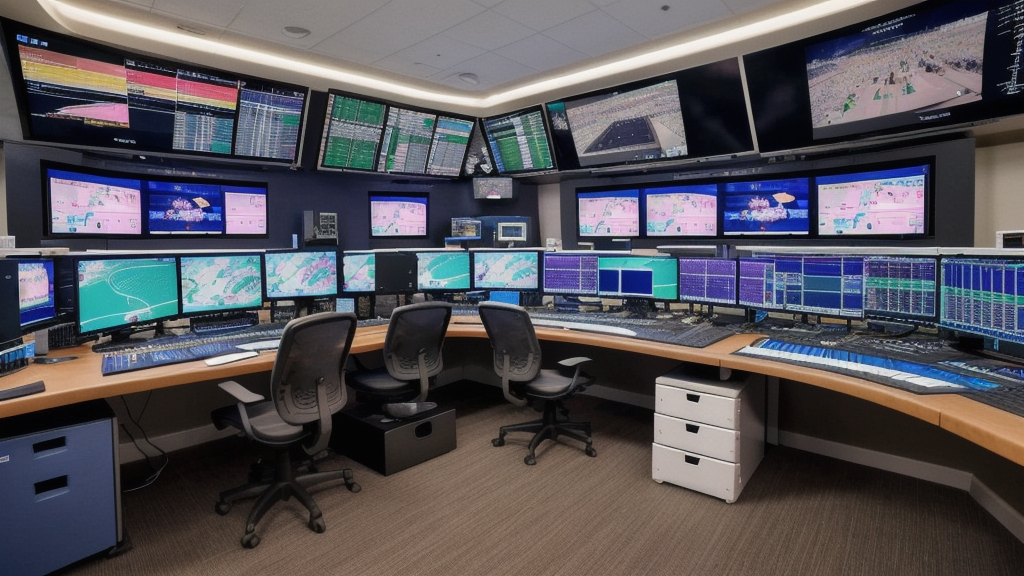
The sports broadcast landscape is undergoing a seismic shift, driven by the rapid deployment of 5G technology. As stadiums and arenas seek to enhance fan experiences and broadcasters look for more efficient ways to deliver content, 5G offers unparalleled connectivity and reliability. This article explores how leading companies are leveraging 5G to redefine remote production.
Ericsson’s 5G Broadcast Solution
One of the frontrunners in this technological leap is Ericsson, a global leader in telecommunications technology. The company has developed a comprehensive 5G Broadcast solution that includes high-speed mobile networks and robust infrastructure support for live events. According to Per Sjöstrand, Director of Sports at Ericsson, “Our 5G solution allows broadcasters to operate with minimal latency, ensuring crystal-clear video quality even under the most demanding conditions.”
Huawei’s Ultra-High Definition Live Streaming
Huawei is another key player in this space, offering its own suite of 5G solutions designed specifically for remote sports production. The company's Ultra-High Definition Live Streaming technology has been deployed at several major events, including soccer matches and basketball games. “With our 5G live streaming capabilities, we are able to deliver content with an unprecedented level of detail and speed,” said Lisa Chen, Vice President of Media Solutions at Huawei.
Real-world Impact: Data and Statistics
The benefits of 5G in remote production extend beyond just improved quality and speed. According to a recent study by the Sports Broadcasting Council (SBC), using 5G networks can reduce latency from 30 milliseconds down to as low as 1 millisecond, a significant improvement that enhances viewer engagement. Moreover, 5G can support up to 1 million devices per square kilometer, making it ideal for large-scale events with numerous cameras and other equipment.
Conclusion
As the industry continues to evolve, it is clear that 5G will play a pivotal role in shaping the future of sports broadcast production. Companies like Ericsson and Huawei are at the forefront of this revolution, providing cutting-edge solutions that push the boundaries of what's possible. With advancements in technology and increased investment in infrastructure, we can expect even more groundbreaking innovations in the years to come.

Remote & Cloud Correspondent · Sports Media Beat
Covering the business of remote & cloud for Sports Media Beat — the intelligence layer for sports media industry professionals tracking rights deals, streaming strategy, and broadcast technology.
All articles by Sloane Mercer →Discussion
Join the conversation
Comments are moderated. Please keep discussion respectful and on-topic. Flag inappropriate content using the flag icon.
You May Also Like
Revolutionizing Sports Production: How Software-Defined Networking (SDN) Enhances Remote and Cloud Broadcasting
Discover how software-defined networking optimizes bandwidth usage, enhances reliability, and secures remote and cloud sports broadcasting operations.

Revolutionizing Remote Sports Production: How 5G is Transforming Live Broadcasts
Discover how 5G technology is revolutionizing remote sports production, offering unprecedented speed and reliability. Companies like Intel and Ericsson are leading this transformation with innovative solutions.
Revolutionizing Live Sports Coverage: How Remote Commentary and Talent Integration Systems are Transforming the Industry
Discover how advanced technologies are revolutionizing live sports coverage with seamless remote commentary and integrated talent management systems.