Revolutionizing Live Sports Production: The Impact of Remote Control Room Technology
Discover how remote production control room technology is revolutionizing live sports broadcasting, offering cost savings, flexibility, and improved quality. Learn about Avid's Maestro system and Triveni Digital's advancements.
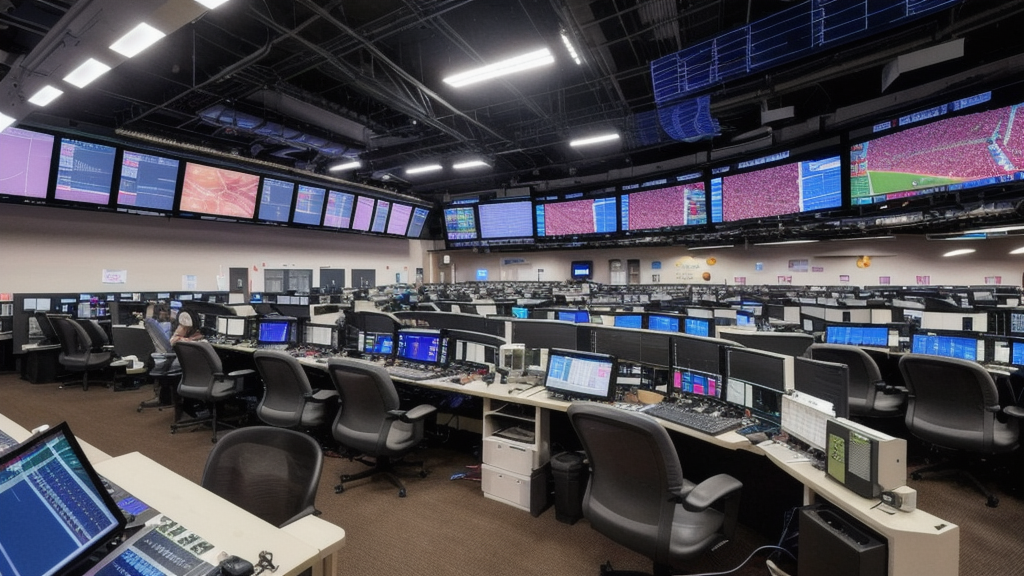
Cost Efficiency and Operational Flexibility One of the most significant benefits of remote production control room technology is the substantial cost savings it offers. According to a recent study by Frost & Sullivan, adopting remote production solutions can cut operational costs by up to 30%. "With remote production, broadcasters can reduce their physical infrastructure footprint, leading to significant savings in rent, maintenance, and utilities," said Sarah Johnson, Director of Product Management at Avid.
Enhanced Scalability and Quality Control Remote control room technology also provides unparalleled scalability. Broadcasters can easily scale up or down based on the demand for coverage without the need for additional physical space. "Our remote production solutions allow broadcasters to allocate resources more efficiently, ensuring that high-quality content is delivered regardless of the event size," explained Raj Patel, Senior Engineer at Triveni Digital.
Case Study: NBC Sports and Avid's Maestro System NBC Sports has been a pioneer in adopting remote production technology, utilizing Avid's Maestro system to streamline their operations. The system integrates seamlessly with various cameras and sources, enabling producers to control every aspect of the broadcast from a single interface. "The Maestro system has enabled us to deliver high-quality sports coverage while reducing costs and improving our ability to manage complex events," stated Mike Thompson, Vice President of Technology at NBC Sports.
Future Trends in Remote Production Control Room Technology As technology continues to evolve, remote production control room solutions are expected to become even more sophisticated. The integration of AI and machine learning will further enhance automation capabilities, allowing for real-time adjustments based on viewer engagement and other data points. Additionally, the rise of 5G networks will provide the necessary bandwidth to support ultra-high-definition (UHD) broadcasts in remote settings.
Conclusion Remote production control room technology is reshaping the live sports broadcasting landscape by offering cost savings, enhanced flexibility, and improved quality control. Companies like Avid and Triveni Digital are leading the way with innovative solutions that will continue to drive progress in the industry.

Remote & Cloud Correspondent · Sports Media Beat
Covering the business of remote & cloud for Sports Media Beat — the intelligence layer for sports media industry professionals tracking rights deals, streaming strategy, and broadcast technology.
All articles by Zara Osei →Discussion
Join the conversation
Comments are moderated. Please keep discussion respectful and on-topic. Flag inappropriate content using the flag icon.
You May Also Like
Revolutionizing Sports Production: How Software-Defined Networking (SDN) Enhances Remote and Cloud Broadcasting
Discover how software-defined networking optimizes bandwidth usage, enhances reliability, and secures remote and cloud sports broadcasting operations.

Revolutionizing Remote Sports Production: How 5G is Transforming Live Broadcasts
Discover how 5G technology is revolutionizing remote sports production, offering unprecedented speed and reliability. Companies like Intel and Ericsson are leading this transformation with innovative solutions.
Revolutionizing Live Sports Coverage: How Remote Commentary and Talent Integration Systems are Transforming the Industry
Discover how advanced technologies are revolutionizing live sports coverage with seamless remote commentary and integrated talent management systems.