Revolutionizing Live Sports Overlays: How Real-Time Graphics Engines Are Shaping the Future of Broadcasts
Discover how real-time graphics engines from Nvidia and Vizrt are revolutionizing sports broadcasts, enhancing viewer engagement and streamlining production workflows.
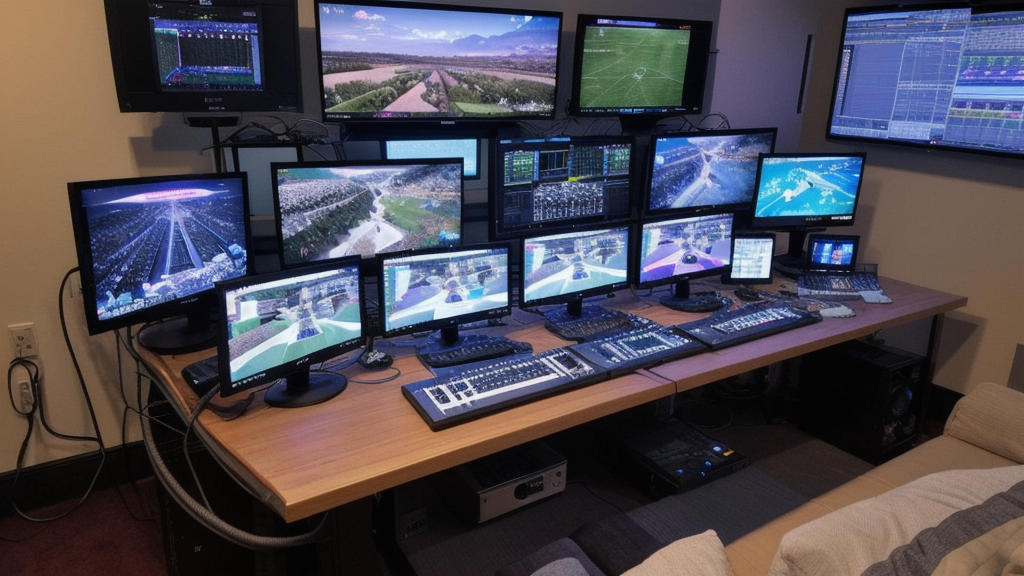
The landscape of live sports broadcasting is undergoing a transformation with advanced real-time graphics engines. Companies like Nvidia and Vizrt are leading this charge, offering cutting-edge solutions that enhance viewer engagement and streamline production workflows.
The Power of Real-Time Graphics in Live Broadcasting
Real-time graphics engines provide broadcasters with the ability to create dynamic, engaging overlays that can be updated on-the-fly during a broadcast. This technology not only enhances the visual appeal of sports events but also allows for more accurate and timely statistical information to be presented to viewers. "The integration of real-time graphics has been a game-changer in our broadcasts," said Sarah Chen, Director of Broadcast Technology at ESPN. "It allows us to present data-driven insights instantly, making the viewer experience far richer and more interactive."
Key Players: Nvidia and Vizrt
Nvidia's NVidia Omniverse is one of the most advanced real-time graphics engines available today. It leverages artificial intelligence and machine learning to create highly realistic and dynamic visual experiences that can be seamlessly integrated into live broadcasts. Vizrt, another frontrunner in this space, offers a suite of tools designed specifically for sports broadcasters. Their Viz Engine 3D platform allows for the creation of complex graphics with minimal technical expertise, enabling teams to focus on delivering engaging content to their audiences. "Our technology is designed to empower broadcasters by providing them with the tools they need to create stunning visuals without compromising on quality or speed," said Michael Lee, CEO of Vizrt. "In today's fast-paced environment, real-time graphics are not just a nice-to-have; they're essential for staying competitive."
Data and Trends
According to a recent report by Statista, the global market for real-time graphics engines in sports broadcasting is expected to reach $1.5 billion by 2030. This growth is driven by increasing demand from broadcasters looking to enhance their offerings and provide viewers with immersive experiences. In addition to enhanced viewer engagement, real-time graphics also offer significant benefits for production teams. By automating many of the manual processes involved in creating and updating graphics, these engines can help reduce production costs and improve efficiency.
Conclusion
As technology continues to evolve, it's clear that real-time graphics engines will play an increasingly important role in live sports broadcasting. With companies like Nvidia and Vizrt leading the way, broadcasters have access to powerful tools that can enhance their offerings and connect with viewers on a deeper level.

Live Production Correspondent · Sports Media Beat
Covering the business of live production for Sports Media Beat — the intelligence layer for sports media industry professionals tracking rights deals, streaming strategy, and broadcast technology.
All articles by Cameron Holt →Discussion
Join the conversation
Comments are moderated. Please keep discussion respectful and on-topic. Flag inappropriate content using the flag icon.
You May Also Like

Broadband Infrastructure: A New Frontier for Live Sports Broadcasting
As the demand for high-quality live sports broadcasting continues to grow, the importance of reliable broadband infrastructure cannot be overstated. In this art

Wisycom MPR60, MATF, and PFL RFoF Box Target Stadium-Scale Wireless for World Cup and OB Fleets
Wisycom's updated MPR60 IFB receiver, MATF wideband antenna matrix, and PFL portable RF-over-fiber box give sports RF crews denser multichannel IFB, consol

Revolutionizing Live Sports: How Advanced Real-Time Graphics Engines Are Shaping the Future of Overlays
Discover how Vizrt's Viz Engine 4 and SportzCast's AI Graphics Studio are revolutionizing live sports with real-time graphics, enhancing viewer engagement and visual storytelling.