Revolutionizing Broadcast: How Hybrid Workflows Are Reshaping Sports Production
Discover how hybrid production workflows combining remote and on-site elements are revolutionizing sports broadcasting with cutting-edge technologies like NewTek's LightSpeed IP Engine and Adobe's cloud solutions.
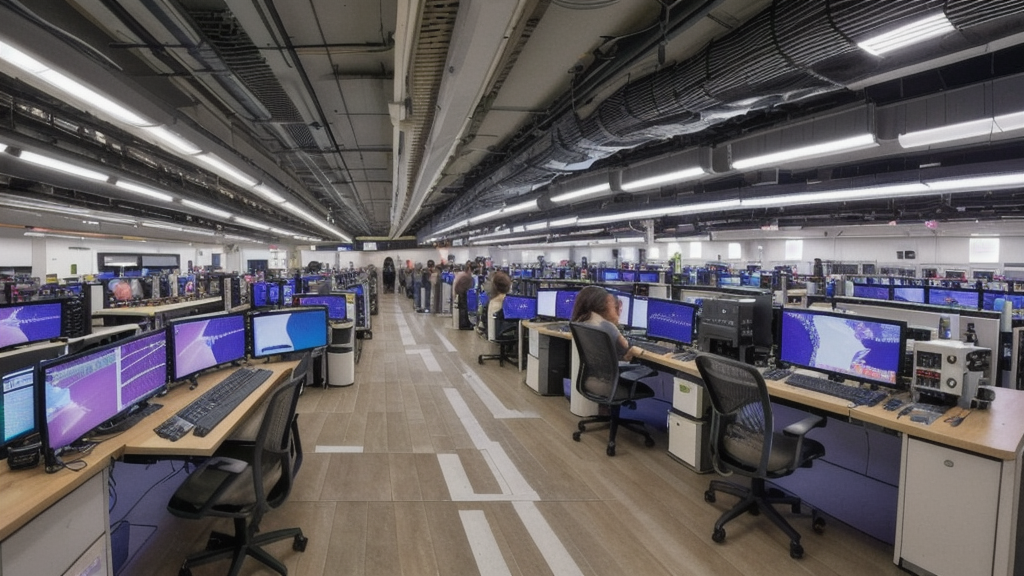
The Evolution of Sports Production Workflows
Traditionally, sports broadcasts relied heavily on extensive on-site equipment setups that required significant investment and coordination. However, with advancements in remote production technologies, this paradigm is shifting. According to a recent report by Frost & Sullivan, the global market for remote broadcast technology is expected to reach $1.5 billion by 2028, driven largely by demand from sports organizations. "The shift towards hybrid workflows represents a significant milestone in how we approach live events," said Sarah Johnson, CEO of LiveStreamTech. "By integrating advanced remote solutions with our on-site capabilities, we can offer broadcasters unparalleled flexibility and cost savings without compromising on quality."
Key Technologies Enabling Hybrid Workflows
Several key technologies are pivotal in enabling seamless hybrid workflows in sports broadcasting. NewTek's LightSpeed IP Engine is one such product that allows for real-time video transport over standard internet connections, facilitating remote production environments with minimal latency. Meanwhile, Adobe’s Premiere Pro and After Effects cloud-based solutions provide broadcasters with the ability to collaborate on content creation regardless of their physical location. "Our cloud-based editing tools are designed to support collaborative workflows across distributed teams," explained Mike Davis, Chief Technology Officer at Adobe Sports Media Solutions. "This is particularly beneficial for sports productions that often span multiple cities or even countries."
Case Studies: Success Stories from the Field
Several broadcasters have already embraced hybrid production workflows with notable success. NBC Sports, for instance, leveraged NewTek's LightSpeed IP Engine during the Winter Olympics, enabling seamless integration between remote and on-site teams to deliver high-quality coverage despite logistical challenges. Similarly, ESPN has implemented Adobe’s cloud-based solutions to streamline its content creation process, allowing editors to work from various locations while maintaining a cohesive editorial workflow. These case studies highlight the practical benefits of adopting hybrid workflows in sports broadcasting, including reduced travel costs and increased efficiency.
The Future of Sports Production
As technology continues to evolve, it is clear that hybrid production workflows will play an increasingly central role in the future of sports broadcasting. By combining the strengths of remote and on-site technologies, broadcasters can enhance their operational capabilities while delivering exceptional content experiences to viewers. In conclusion, the integration of hybrid workflows represents a transformative shift in how sports broadcasts are produced. With solutions like NewTek's LightSpeed IP Engine and Adobe’s cloud-based tools, broadcasters are well-equipped to navigate this exciting new era of media creation.

Remote & Cloud Correspondent · Sports Media Beat
Covering the business of remote & cloud for Sports Media Beat — the intelligence layer for sports media industry professionals tracking rights deals, streaming strategy, and broadcast technology.
All articles by Tyler Bast →Discussion
Join the conversation
Comments are moderated. Please keep discussion respectful and on-topic. Flag inappropriate content using the flag icon.
You May Also Like

Revolutionizing Sports Production: How Software-Defined Networking (SDN) Enhances Remote and Cloud Broadcasting
Discover how software-defined networking optimizes bandwidth usage, enhances reliability, and secures remote and cloud sports broadcasting operations.

Revolutionizing Remote Sports Production: How 5G is Transforming Live Broadcasts
Discover how 5G technology is revolutionizing remote sports production, offering unprecedented speed and reliability. Companies like Intel and Ericsson are leading this transformation with innovative solutions.
Revolutionizing Live Sports Coverage: How Remote Commentary and Talent Integration Systems are Transforming the Industry
Discover how advanced technologies are revolutionizing live sports coverage with seamless remote commentary and integrated talent management systems.

