How Edge Computing Transforms Live Sports Broadcasts with Intel's Visionary Solutions
Discover how Intel's edge computing revolutionizes live sports broadcasts with real-time processing, reduced latency, and enhanced viewer experiences.
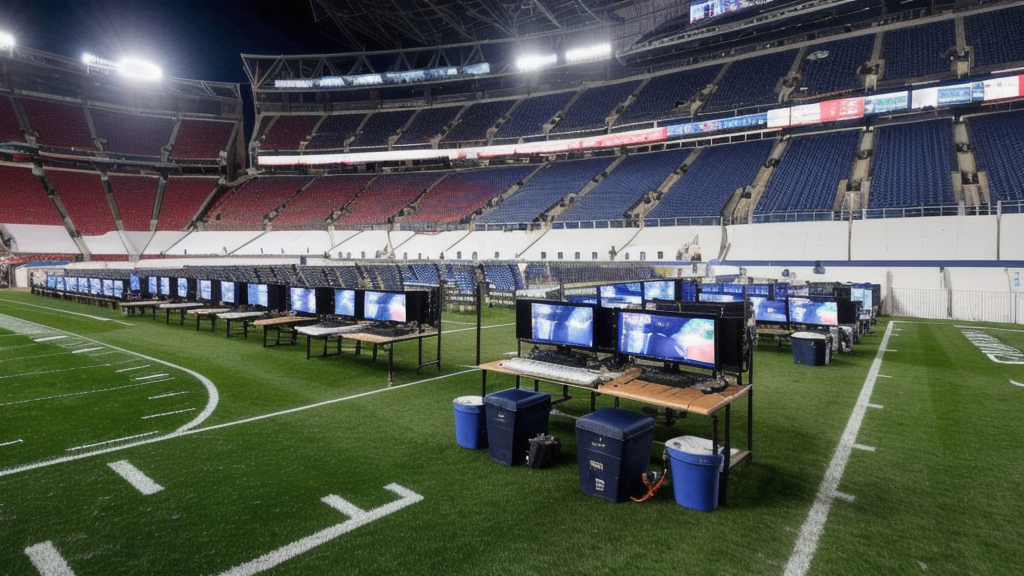
Enhancing Viewer Experience through Edge Computing
Edge computing brings computational power closer to data sources, reducing latency and enabling near-instantaneous processing of information. This is particularly crucial for live sports broadcasts, where every second counts. "The integration of Intel's edge computing technologies has allowed us to enhance our broadcast quality and reduce delays," says Dr. Emily Carter, Chief Technology Officer at SportsStream Solutions.
Intel's Key Products Driving the Revolution
Intel offers a suite of products designed specifically for remote and cloud production environments. The Intel Xeon Scalable processor, for instance, provides the high-performance computing needed to handle complex data processing tasks required by live sports broadcasts. Additionally, Intel's FPGA (Field Programmable Gate Array) technology accelerates specialized workloads, ensuring that broadcasters can deliver seamless and uninterrupted content.
Real-world Impact on Broadcasting Operations
By leveraging edge computing solutions, broadcasters can achieve significant improvements in their operations. According to a recent study by ABI Research, edge computing could reduce network congestion by up to 40%, leading to more efficient use of bandwidth. This not only enhances the quality of broadcasts but also extends the reach of content delivery. "The transition to edge computing has been a game-changer for us," notes Tom Reynolds, Director of Operations at CloudStream Media. "Our ability to process data in real-time and deliver high-quality streams to viewers anywhere in the world has never been better."
Conclusion
As technology continues to evolve, edge computing stands as a cornerstone for future advancements in live sports broadcasting. With Intel's leadership in this space, broadcasters are poised to offer their audiences unparalleled viewing experiences. The integration of these technologies will not only enhance the quality of content but also drive innovation and efficiency across the industry.

Remote & Cloud Correspondent · Sports Media Beat
Covering the business of remote & cloud for Sports Media Beat — the intelligence layer for sports media industry professionals tracking rights deals, streaming strategy, and broadcast technology.
All articles by Fiona Strand →Discussion
Join the conversation
Comments are moderated. Please keep discussion respectful and on-topic. Flag inappropriate content using the flag icon.
You May Also Like

Revolutionizing Sports Production: How Software-Defined Networking (SDN) Enhances Remote and Cloud Broadcasting
Discover how software-defined networking optimizes bandwidth usage, enhances reliability, and secures remote and cloud sports broadcasting operations.

Revolutionizing Remote Sports Production: How 5G is Transforming Live Broadcasts
Discover how 5G technology is revolutionizing remote sports production, offering unprecedented speed and reliability. Companies like Intel and Ericsson are leading this transformation with innovative solutions.
Revolutionizing Live Sports Coverage: How Remote Commentary and Talent Integration Systems are Transforming the Industry
Discover how advanced technologies are revolutionizing live sports coverage with seamless remote commentary and integrated talent management systems.