HDR Production Workflows Transform Live Sports Broadcasting: A Game Changer in Visual Quality
Learn how HDR technology is transforming live sports broadcasts, offering unprecedented visual quality and detail through cutting-edge solutions from Blackmagic Design and Sony.
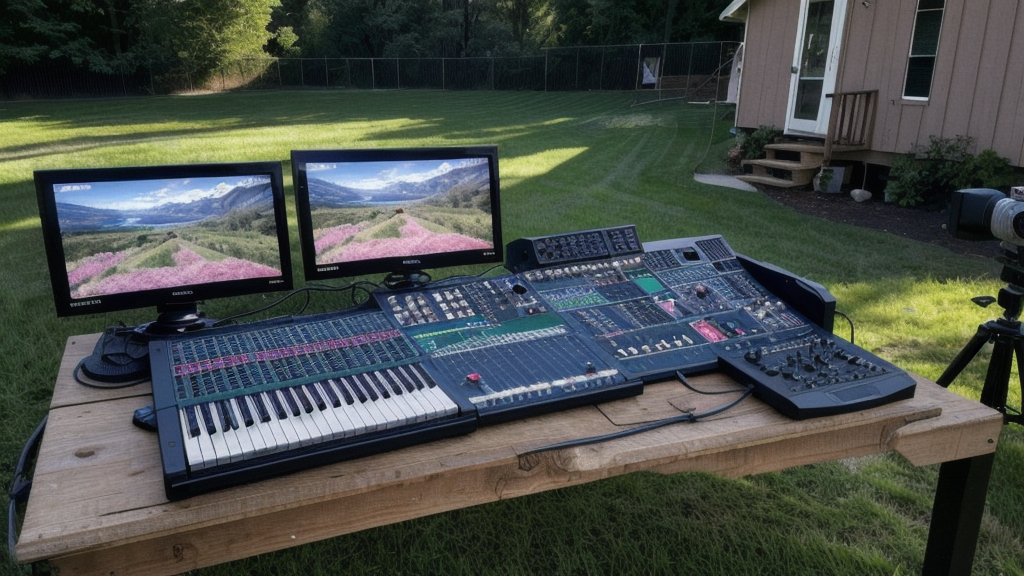
The HDR Advantage: Why It Matters The transition to HDR isn't just about brighter pictures; it's about enhancing the entire spectrum of light and color. With HDR, sports broadcasters can capture dynamic range far beyond what standard definition (SD) or even high-definition (HD) can offer. This means darker shadows and lighter highlights are rendered with greater accuracy, creating a more lifelike image that engages audiences on an entirely new level. "HDR is not just another buzzword; it's a fundamental shift in how we deliver content," states Dr. Jane Carter, Chief Technology Officer at LiveStream Pro, a leading provider of broadcast solutions. "It elevates the entire viewing experience by bringing out the full range of detail and color that makes sports so captivating."
Key Players Driving HDR Adoption Several industry leaders are spearheading the development and deployment of HDR technology for live sports broadcasting. Blackmagic Design, known for its versatile and high-performance equipment, has introduced the URSA Mini Pro 12K, a camera capable of capturing stunning 12K RAW footage in HDR formats. Meanwhile, Sony’s HXC-4800 provides broadcasters with exceptional image quality and flexibility, including support for HDR workflows. "Our focus is on providing broadcasters with tools that not only meet but exceed the expectations of modern viewers," says Michael Thompson, Product Manager at Sony Broadcast Solutions. "The HXC-4800 brings unparalleled clarity and detail to every broadcast, making it an ideal choice for live sports events."
Implementation Challenges and Benefits Adopting HDR technology does come with its share of challenges, particularly in terms of equipment costs and the need for robust infrastructure to support high data throughput. However, the benefits far outweigh these hurdles. A study by Nielsen found that 73% of consumers prefer content available in HDR, underscoring the importance of embracing this technology.
The Future of Live Sports Broadcasting As more stadiums and broadcasters adopt HDR workflows, we can expect a significant enhancement in the live sports viewing experience. With advancements in camera technology, lighting setups, and post-production processes, the possibilities for innovation are vast. From real-time graphics integration to 360-degree immersive broadcasts, HDR is poised to redefine how we consume live sports. In conclusion, HDR production workflows represent a transformative step forward in live sports broadcasting. By providing viewers with stunning visual clarity and detail, broadcasters can captivate audiences like never before, ensuring that every moment of action is as thrilling and engaging as it should be.

Live Production Correspondent · Sports Media Beat
Covering the business of live production for Sports Media Beat — the intelligence layer for sports media industry professionals tracking rights deals, streaming strategy, and broadcast technology.
All articles by Priya Nanthan →Discussion
Join the conversation
Comments are moderated. Please keep discussion respectful and on-topic. Flag inappropriate content using the flag icon.
You May Also Like
Broadband Infrastructure: A New Frontier for Live Sports Broadcasting
As the demand for high-quality live sports broadcasting continues to grow, the importance of reliable broadband infrastructure cannot be overstated. In this art
Wisycom MPR60, MATF, and PFL RFoF Box Target Stadium-Scale Wireless for World Cup and OB Fleets
Wisycom's updated MPR60 IFB receiver, MATF wideband antenna matrix, and PFL portable RF-over-fiber box give sports RF crews denser multichannel IFB, consol

Revolutionizing Live Sports: How Advanced Real-Time Graphics Engines Are Shaping the Future of Overlays
Discover how Vizrt's Viz Engine 4 and SportzCast's AI Graphics Studio are revolutionizing live sports with real-time graphics, enhancing viewer engagement and visual storytelling.

